
How to Learn Quranic Arabic Online: A Step-by-Step Guide
 Rawdh Team·5 min read·6 June 2026
If you want to learn Quranic Arabic, really learn it, not just memorise a handful of surahs by sound, the good news is that there is a proven order that works, and the whole path is now available online. The bad news is that most Muslims never see that order. They try a bit of everything, plateau, and quietly give up.
This guide lays out the sequence that actually gets adult learners from "I can barely sound out the letters" to "I can read a page of the Qur'an and feel what it says." It's the same sequence we use in our online Quranic Arabic course at Rawdh, distilled into six honest stages.
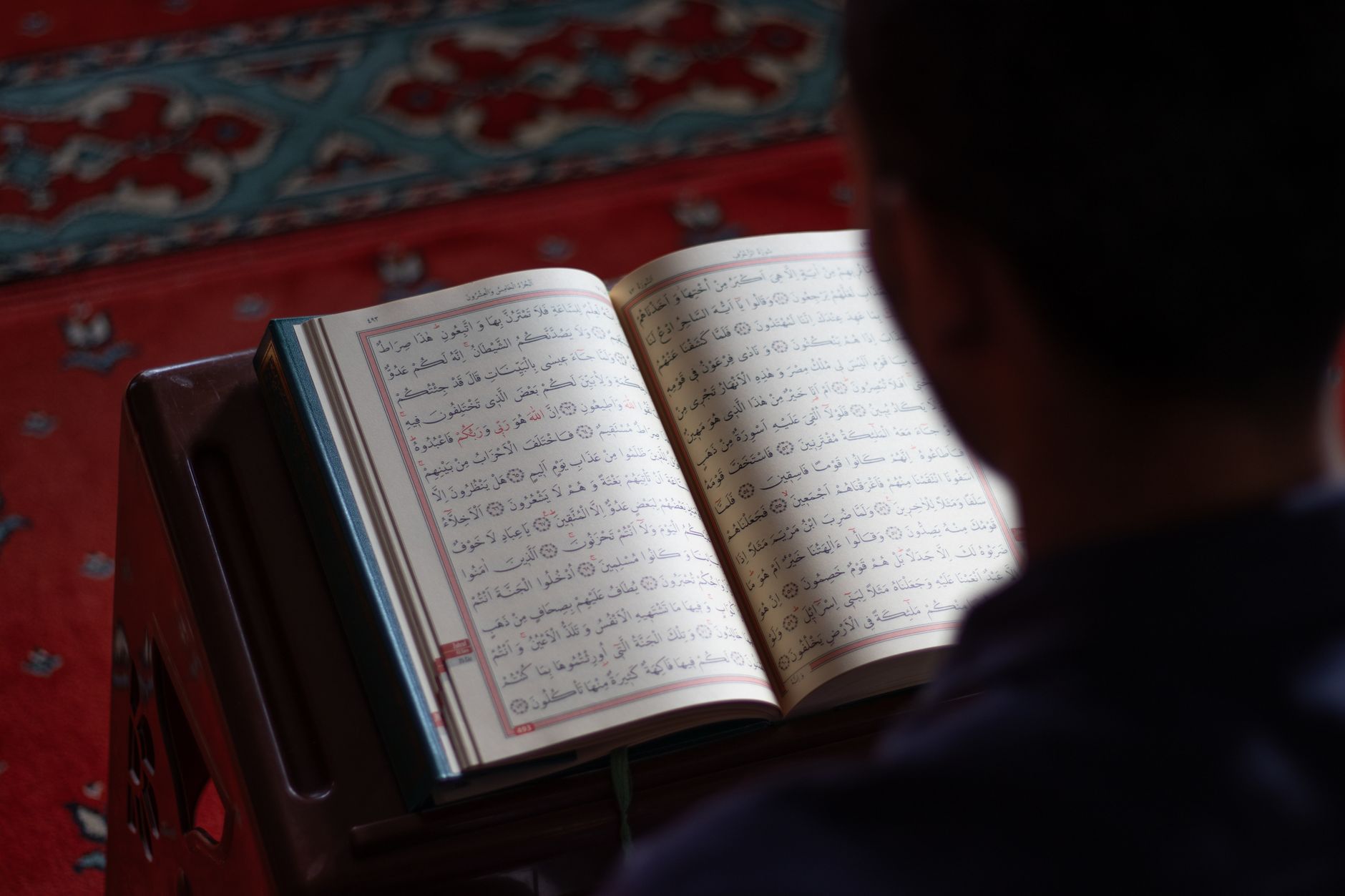
First, what "Quranic Arabic" actually means
Quranic Arabic is not a separate language. It is classical Arabic (Fuṣḥā), the register preserved in the Qur'an and the classical Islamic sciences. Modern Standard Arabic (MSA), the Arabic of newspapers, books and formal speech today, is essentially classical Arabic with a modernised vocabulary layered on top. If you learn Quranic Arabic, MSA becomes an easy extension. If you learn only spoken dialects (ʿāmmiyyah), you will not understand the Qur'an at all.
Quranic Arabic vs Modern Standard Arabic. Same grammar, same core vocabulary. The Qur'an uses a tighter, higher, more concise style, every word carries weight. MSA is looser and more repetitive, because news writing has to be. Start with Quranic Arabic and MSA comes free; start with dialect and neither comes.
Stage 1 · Learn the script and the sounds
Before grammar or vocabulary, learn the 28 letters of the Arabic alphabet in their isolated, initial, medial and final forms. Pair this with the short vowels (ḥarakāt) and the basic rules of Tajwīd, the articulation points (makhārij) and elongations that govern Qur'anic recitation.
Aim for accurate, slow recitation first. Speed comes later. This stage takes most adults 4 to 8 weeks with consistent daily practice, and it needs a human teacher to correct your mouth position, apps cannot hear you.
Stage 2 · Build a Qur'an-specific vocabulary
Roughly 80% of the Qur'an is built from about 300 high-frequency roots. Learning these first means every new surah you open is more transparent than the last. Two rules:
- Use spaced repetition daily. Twenty new words a day, reviewed the next day, then three days later, then a week later, will beat a two-hour weekend cram every time.
- Always learn vocabulary in context, from real āyāt. Isolated word lists slip away within days. A word attached to a verse you already recite sticks for years.
Stage 3 · Learn grammar in small, applied doses
Classical Arabic grammar, naḥw (syntax) and ṣarf (morphology), is famously deep. You do not need to master it before you start understanding the Qur'an. Focus first on:
- Pronouns and pronoun suffixes (huwa, hum, hu, hum…).
- The definite article, and the three noun cases (nominative, accusative, genitive).
- Past, present and command verbs in the three persons.
- Common prepositions and particles (fī, ʿalā, min, ilā, inna, an, lākin…).
Apply each rule to a verse the same day you learn it. Grammar memorised without application slips away within weeks; grammar applied to Sūrat al-Fātiḥah on Monday is still yours on Sunday.
Stage 4 · Read word-by-word, then without the crutch
Move to word-by-word translations of short surahs. Juzʾ ʿAmma (the 30th juzʾ) is the natural starting point because you probably already recite much of it. Read the Arabic aloud, then read each word's meaning, then re-read the verse and try to feel the meaning before glancing at the translation. After a few weeks of this, familiar verses begin to make sense on first pass, a moment every learner remembers.

Stage 5 · Make it a daily habit, not a weekend course
Twenty focused minutes every day outperforms a three-hour weekend session every time. Language acquisition is consolidated during sleep, so daily exposure compounds in a way weekly study cannot. If you have to miss a day, miss a day, do not miss two.
Twenty focused minutes every day beats a three-hour weekend session. What you learn on Monday should touch the Qur'an you read on Tuesday.
Stage 6 · Learn inside a structured curriculum
Self-study works for the first weeks. Most learners stall around the grammar stage without a curriculum that sequences vocabulary, grammar and recitation together. A structured track removes the guesswork: what to study next, which root to memorise, which surah to apply it to.
A realistic timeline
| Milestone | Time (at 20 min/day) |
|---|---|
| Read the Arabic script accurately with ḥarakāt | 1 to 2 months |
| Understand ~30% of Juzʾ ʿAmma word-by-word | 3 to 4 months |
| Read short surahs (An-Nabāʾ, An-Nāziʿāt) with comprehension | 6 to 9 months |
| Read a page from the middle of the Qur'an with understanding | 2 to 3 years |
| Full independent reading of the Qur'an in Arabic | 4 to 6 years of steady study |
These are honest ranges for adults with jobs and children. Faster is possible with more time; slower is fine if you are consistent. What is not honest is any promise of "understanding the Qur'an in 30 days."
Self-study apps vs a structured Quranic Arabic course
Apps like Duolingo teach Modern Standard Arabic vocabulary in a game format. They are fine as a supplement, no more. They cannot correct your recitation, cannot answer your grammar question, and cannot sequence your study around the Qur'an itself.
A serious online Quranic Arabic course is different: it pairs a real teacher with a curriculum that goes recitation → high-frequency vocabulary → applied grammar → guided reading, in that order, with weekly live classes and daily recall so the words you learned last month are still there this month. The classical Madinah Arabic Books are the textbook backbone of exactly that path, and worth a look if you like to see the roadmap on paper before you start.
If you want the structured version of this path, recitation with an Al-Azhar trained scholar, high-frequency Qur'an vocabulary, applied grammar and guided reading of Juzʾ ʿAmma, start with our online Quranic Arabic course or book a free 20-minute call and we will place you at the right stage. Curious about the teachers behind the method? Read how the Al-Azhar method works.
Related guides

Days of the Week in Arabic Language: The Complete Guide
The Arabic days of the week follow a counting system rooted in Classical Arabic numerals. See the pattern that turns seven words into one insight.

The Madinah Arabic Books: A Complete Guide (Books 1 to 3)
The Madinah books have been the backbone of Arabic teaching for non-native speakers for four decades. Here's what each volume covers and how to study them well.

The Al-Azhar Method: How Traditional Islamic Scholarship Is Taught (and Why It Still Beats Apps)
The talaqqi method, the ijazah chain, and what a millennium of Al-Azhar teaching tells you about how to choose an online Arabic teacher today.